
The death of SaaS: when everyone has the same engine
What you'll get
Three questions for building an AI product whose value survives when competitors gain access to the same model.
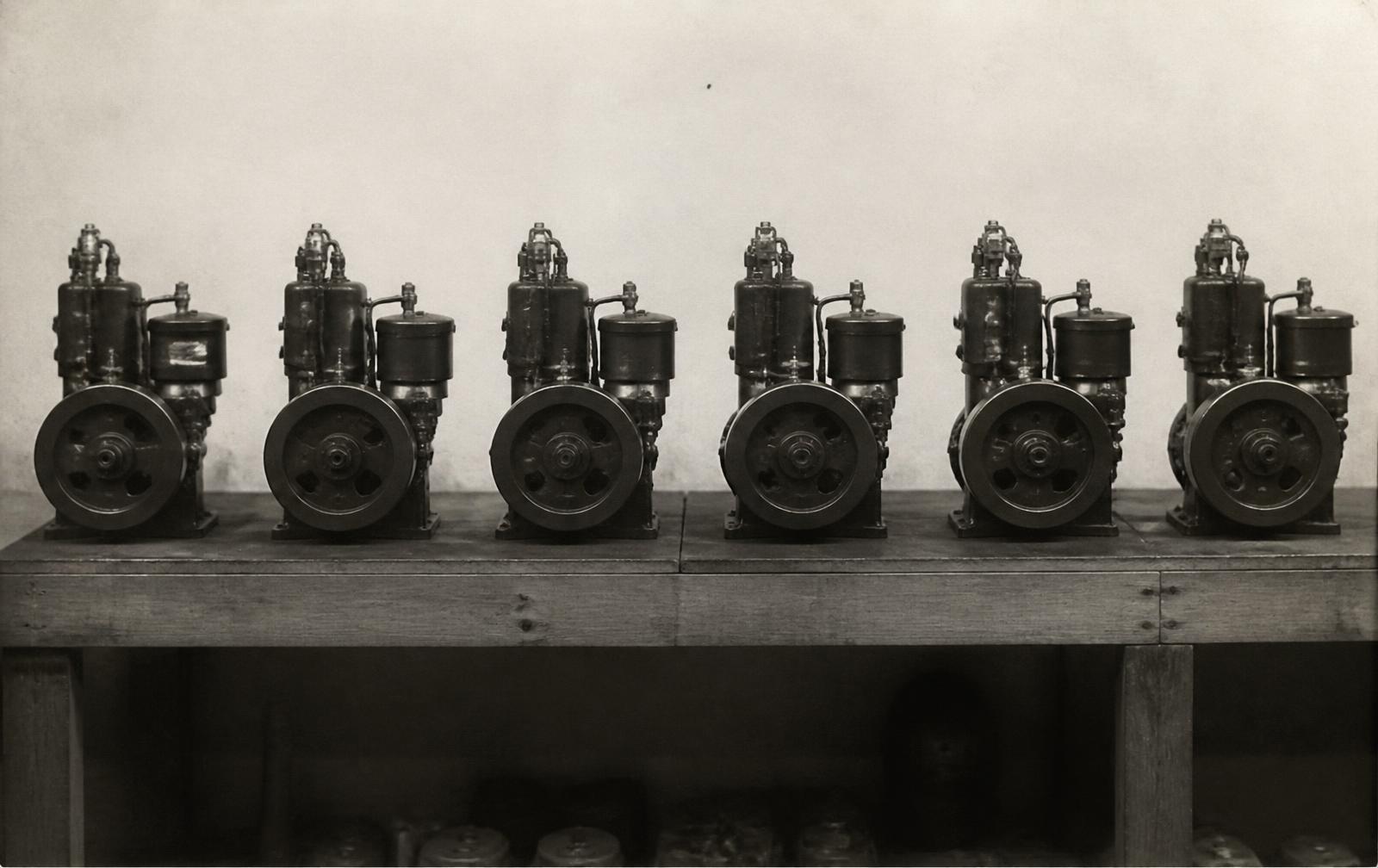
I built a thing on Lovable this spring. One evening, maybe three hours. When it worked I sat there feeling like a small genius. Then it hit me that anyone could build roughly the same thing, in roughly the same time, with exactly the same tools. The engine I used was the same engine my imagined competitor would use. Same model, same API, same price tag.
That's the slightly uncomfortable insight underneath everything right now. The model isn't your thing. When you build with Claude, your neighbour builds with Claude too. Intelligence has become a commodity, a bit like electricity. And nobody wins a company by having access to electricity.
Marc Andreessen says it outright: the moat isn't the model, it's what you build around it. The point is counterintuitive. Prices don't fall when technology becomes a commodity. The winners charge more, because the value sits in the layers on top: the workflow, the data, the habit, the feel. The model is free now, or nearly. That's where the hard part begins.
And that suddenly makes three questions the whole game. Not nice-to-have questions. Fundamental ones.
How do you build a genuinely good UI? How do you build trust? And how do you create something competitors find hard to copy?
I think they're more connected than they look. But let's take them one at a time.
1. The UI isn't the paint job
It's easy to think of the interface as the thing you fix last, once the important work is done. The paint. But in a landscape where everyone has the same engine, the interface isn't the paint. It's the only part the user actually touches.
Nobody experiences your model. People experience the field they type in, the second before the answer appears, how it feels when something goes wrong. Two products can sit on exactly the same API and be worlds apart to use. The difference isn't technology. The difference is a thousand small decisions nobody notices individually.
I learned something at Berghs that stuck: your own taste and judgement are the raw material, AI amplifies what you already have. A good UI is essentially frozen taste. It's someone who has sat there and felt that no, that button shouldn't be there, no, we shouldn't ask the user that question, yes, this should be faster even if it costs us something else. Features can be copied in an afternoon. Taste can't be downloaded.
That's also why "AI wrappers" get an unnecessarily bad name. A thin layer on top of a model is worthless. A considered layer, built by someone with judgement, is the entire product.
2. Trust is the real bottleneck
Here there are numbers, and they're more interesting than you'd think.
In KPMG's global study from 2025, just over 48,000 people in 47 countries, only 46 percent said they were willing to trust AI. At the same time 66 percent use it regularly. Read that sentence again. People use something they don't trust. And 57 percent of working respondents admit they hide their AI use and hand in AI-generated work as their own.
That tells me capability isn't the problem anymore. Trust is the problem. The models can already do more than most people dare let through. What's missing isn't more tokens per second, it's a reason to dare.
Trust is built slowly and through boring things. That the product does what it says. That it doesn't exaggerate what it can handle. That it's honest when it's unsure, instead of sounding just as confident when it's wrong as when it's right. That it doesn't do anything strange with your data. None of that shows up in a demo. All of it shows after three weeks of use.
And unlike a feature, trust can't be copied from someone else. You can steal an interface over a weekend. You can't steal the two years a competitor spent never letting their users down. Which takes us onward.
3. The things that are hard to imitate
Hamilton Helmer wrote a book, 7 Powers, about exactly this question: what actually makes a company hard to copy? Not "better", but hard to copy. Those are two entirely different things.
Almost nothing on his list is about the product itself. It's about switching costs, meaning how painful it is to leave once your workflow already lives inside the tool. It's about process power, the knowledge an organisation accumulates over time that you can't read your way to. It's about brand, which is really just another word for accumulated trust. And it's about data only you have, because you were there when it was created.
Look at that list again. None of them is something you can build in one evening on Lovable. That's precisely the point. What's easy to build is easy to imitate, by definition. What takes time to build is hard to take from you, for exactly the same reason.
The new model everyone will be talking about next week, your competitor will have it too. The data you've gathered, the habit you've built into people's days, the trust you haven't broken — that they have to start from zero on.
It's really one single question
I promised the three were connected, and they are.
A good UI makes a human dare to press the button. Every time the product then delivers without letting them down, trust grows a little. Trust makes people stay, and when they stay they leave behind data and habits and a workflow that becomes theirs. And that data, those habits and that trust are the very thing a competitor can't lift over into their own build.
UI, trust and defensibility aren't three projects, then. They're the same loop, seen from three sides. And a loop has to spin for a while before it means anything.
That's where it chafes. All of this is slow. It's patience, repetition and a lot of invisible work, in a landscape that rewards speed and the next model release. Everyone is running on the same engine now, and the only thing that lasts is the stuff you can't sprint your way to.
The question isn't whether these are the right things to build. I think we know that. The question is whether we have the stamina to build them, while everyone around us sprints the other way.
Note: the KPMG figures come from a self-reported survey, so read the exact percentages as direction rather than precise truth. The direction, though, is clear and consistent with other data: adoption is running ahead of trust.
Sources
- 01Trust, attitudes and use of artificial intelligence: A global study 2025KPMG & University of Melbourne
- 02Marc Andreessen: the moat is not the modelThe AI Corner
- 03
- 04The real AI moat: data, workflows, customer relationshipsChimera Marketing
- 05AI moats 2026Valtorian
More to read