
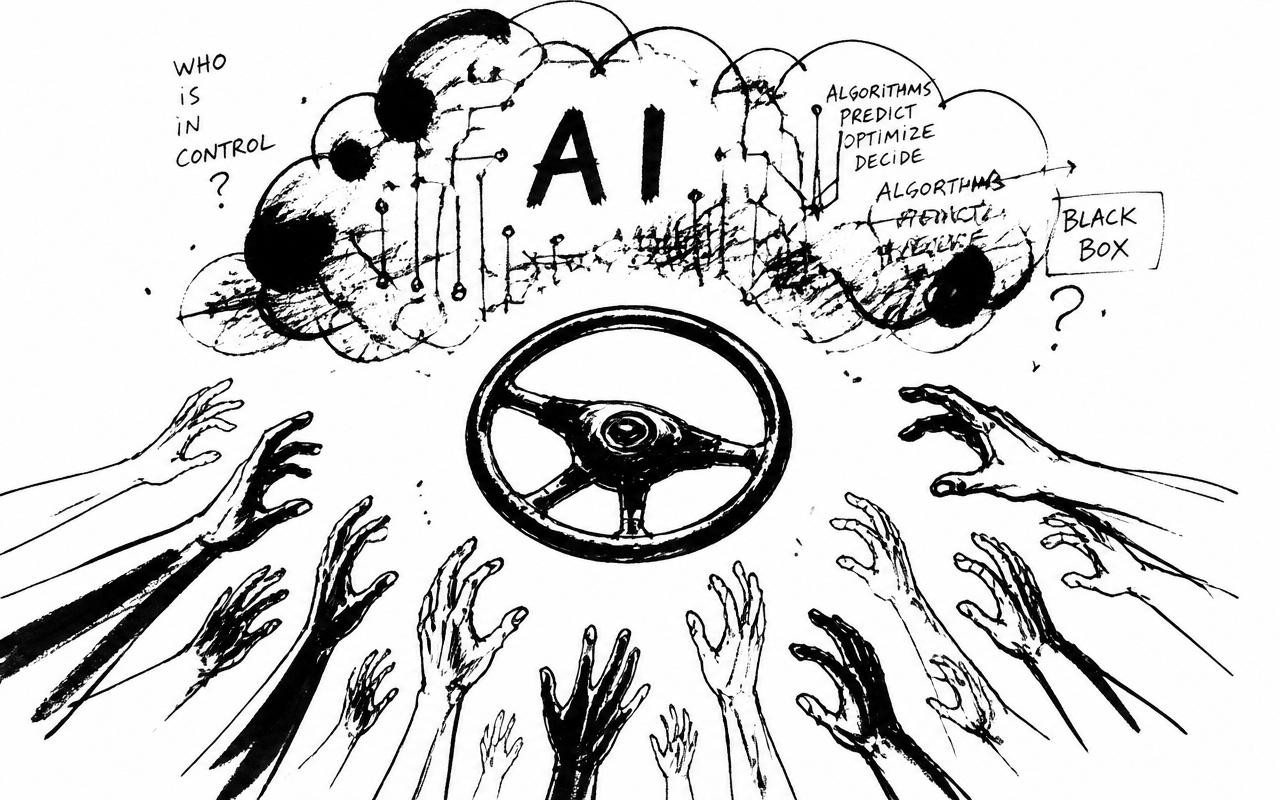
Every company runs AI now. But almost no one is steering it.
What you'll get
The questions that reveal whether your AI work creates real impact or merely more activity.
There's one number in NOOS's new report that will be quoted to death: 47 percent of Swedish marketing directors say their team is already using AI extensively. The headline writes itself. AI has arrived, we're on board, applause.
Read it a bit sideways, and it's the dullest number in the whole report.
Because the moment almost everyone has the tool, the tool stops meaning anything. "Do you use AI" was a sharp question in 2023. In 2026 it's about as revealing as asking whether the office has wifi. The answer is yes. And? The interesting thing is no longer who has access. It's who has decided what it should be used for.
That's where a hole opens up big enough to drive a truck through.
Adoption is a vanity metric
The same report that celebrates 47 percent usage reports that 34 percent have a written AI strategy, and that 19 percent have someone who actually owns the issue. Read that last figure again. One in five organisations has someone responsible. Four out of five, in other words, are running a tool that touches brand, customer data and decision-making without anyone holding the wheel.
This isn't a technology problem. It's a decision-making problem disguised as a technological advance.
AI has spread through Swedish marketing teams exactly the way tools usually spread: from the bottom up, ad hoc, one curious employee at a time finding something clever on a random Tuesday. As a way of learning, that's brilliant. As a way of building something durable, it's useless. The purchase, or in this case the log-in, is the easy part. That's the dopamine. Deciding what the thing should do, who owns it, and how you'll know if it's working, that's the job. And the job doesn't show up in an adoption figure.
Governance beats access, and it's not even close
If you think I'm exaggerating, look at where the money lands.
Among those reporting that AI has actually delivered a profitability effect, 75 percent have embedded the technology broadly across their workflows. Among the rest: 26 percent. The same pattern on the strategy side, 51 versus 17 percent. The effect, in other words, doesn't sit in whether you use AI, but in how deeply and how deliberately.
It's an uncomfortable figure, because it fails the most common AI initiative in Sweden right now: give everyone a tool, hold a lunch and learn, hope for the best. That model produces activity. It doesn't produce results. The difference between the team that makes money from AI and the team that just uses it isn't budget or a tool licence. It's that someone sat down and decided.
Everyone's crowding into content. The money's in the boring stuff.
This is where it gets really interesting, and a bit embarrassing for those of us in marketing.
Where's AI usage highest? In content, copy and creative production. Of course. It's fun, it's immediately visible, and it's where we already feel at home. Where's usage lowest, and where's the biggest gap between winners and losers? In data analysis (53 versus 17 percent), in campaign optimisation (55 versus 19) and in CRM (47 versus 17).
Translated: everyone's flocking to where the impact is smallest, and few dare venture to where the impact actually is.
It's not strange. Letting a model write three headline options is gratifying and harmless. Letting it touch your customer data, your attribution, your pipeline, that requires you to first have your data in order, know what you're measuring, and dare to trust the outcome. It's boring. It's hard work. And that's exactly why the ones who do it are pulling ahead. The competitive edge in 2026 isn't writing faster newsletters. It's at the back of the house, in the stuff no one posts about on LinkedIn.
It's never about the tool
DEMA essentially sums up the whole report in one sentence in it: the winners won't be the ones with the most AI tools, but the ones who build the best decision systems around them.
I believe that, for a slightly embarrassing reason: it matches the only thing I've learned myself from actually building AI stuff in practice. The first things I did were the fun, visible ones. What actually saved time and moved a number was the boring bit: a background workflow no one sees, doing the same thing correctly every time. None of it was about which tool I chose. All of it was about the fact that I'd decided what it should do.
So next time someone cites the 47-percent figure as proof the industry is cutting edge, ask the only question that matters: okay, but who owns it, and how do you know it's working?
If the answer is silence, then you know where the real work begins.
More to read