
When everyone can produce more content, the human CMO's most important edge
What you'll get
Three priorities for marketing leaders who want AI efficiency without sacrificing trust, distinctiveness or owned relationships.
One underrated site I read every week is CMO-svepet.se. Three of the site's most-read articles are currently pointing at the same shift: engagement on social media is falling, consumers are demanding more authentic communication, and storytelling is becoming an increasingly vital skill for marketing directors. Together, the trends show that the marketing of the future is less about producing the most — and more about creating trust, meaning and long-term relationships.
For a long time, digital marketing has been governed by a fairly simple logic: publish often, adapt content to each platform's format, and use new technology to produce faster.
But the playing field is changing.
In the article "Engagement on social media is falling — what are you doing about it?" CMO-svepet describes how brands are facing ever-weaker organic engagement on social platforms.
At the same time, the article "Trend shift in the AI question: consumers are demanding more authentic communication" shows that audiences are growing more critical of content that feels artificial, generic or overly polished.
In a third article, "Forbes: Storytelling becomes the CMO's most profitable skill in 2026", CMO-svepet highlights storytelling as a core capability for the marketing director of the future.
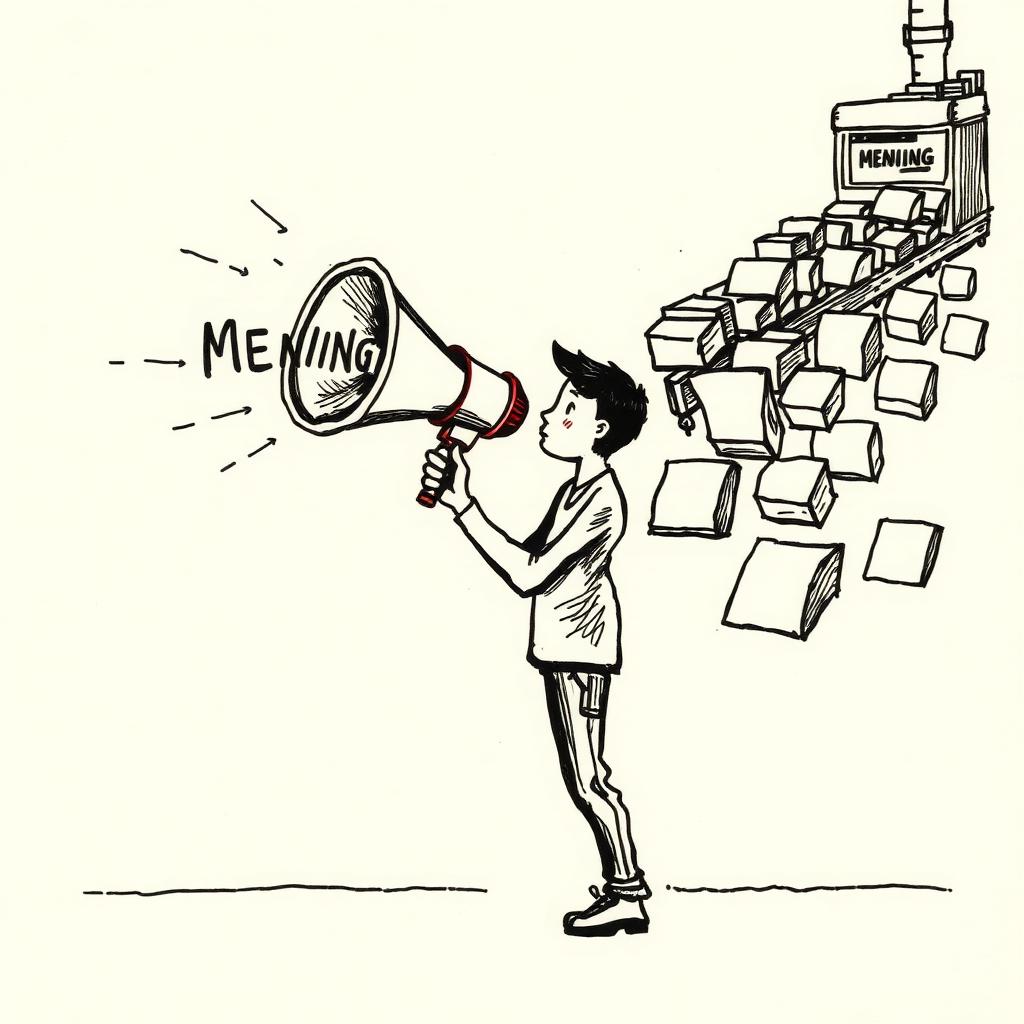
Together, the articles point to a clear shift: as the volume of content increases, it becomes harder — and more important — to create communication that actually feels relevant.
Reach is not the same thing as relationship
As CMO-svepet notes, a large follower count no longer means a brand's content automatically reaches its audience.
Social platform algorithms prioritise content based on users' behaviour and interests. Companies therefore have limited control over both reach and visibility.
That makes social media a more unpredictable channel for relationships.
Platforms can still be effective for creating attention, reaching new audiences and driving traffic. But they're a shaky foundation for a long-term customer relationship.
One key conclusion from CMO-svepet's article is therefore that companies need to prioritise their owned channels more highly.
Newsletters, websites, CRM systems, loyalty clubs, events and communities give the organisation greater control over both the communication and the customer relationship.
On social media, the brand is renting its reach. In an owned channel, the company instead builds its own capital of data, trust and recurring attention.
AI makes production cheaper — but not trust
Generative AI has quickly become a standard part of the marketing organisation's toolkit.
The technology can streamline research, analysis, ideation, production and content adaptation. At the same time, CMO-svepet describes a growing backlash against communication perceived as impersonal, generic or artificial.
The problem isn't necessarily that companies use AI.
The problem arises when the technology replaces human judgement, creativity and a clear sender.
As more and more people can create well-written text, professional images and technically polished films, the value of perfection as a competitive tool shrinks.
What becomes harder to copy instead is personality, experience, cultural understanding and a clear point of view.
CMO-svepet's analysis therefore shows that AI should be used to reinforce a brand's idea and identity — not to replace it.
This is also where many marketing organisations risk going wrong.
When technology makes it possible to produce more, the natural reaction is often to also publish more. But higher volume doesn't automatically mean higher relevance. On the contrary, a constant stream of similar content can weaken the brand and make it harder for the audience to understand what the company actually stands for.
The most important question therefore isn't: how much can we produce?
It becomes: what do we actually have to say?
Storytelling becomes the organisation's unifying system
In this landscape, storytelling becomes more than a way to make a campaign interesting.
The narrative becomes a strategic tool for creating consistency across the company's various touchpoints.
Products can be copied. Features can be developed by competitors. Prices can be matched. Campaign formats can be recreated.
A strong, credible story is far harder to imitate.
In CMO-svepet's article on storytelling, narrative is described as an increasingly important skill for marketing directors. The CMO's mandate then isn't just about commissioning and distributing content, but about developing a narrative that holds the whole organisation together.
The story needs to be recognisable in product development, sales, customer service, corporate communication and the employer brand.
The marketing organisation therefore needs to move from asking: what should we publish this week? to asking: what story do we want the customer to understand, feel and pass on?
A strong story doesn't just describe what the company sells. It shows the change the customer can achieve.
The product isn't the protagonist. The customer is the protagonist — and the product is a tool along the way.
Three priorities for the marketing director
The three developments CMO-svepet highlights shouldn't be seen as separate trends. They're different expressions of the same shift: the supply of content is growing faster than people's supply of attention.
To meet this shift, marketing directors need to prioritise three areas.
**1. Build relationships the company owns itself.** Use social media to create discovery and interest, but build clear paths onward to newsletters, events, memberships and other direct customer relationships. Social media should be the start of the relationship, not the whole relationship. When a company succeeds in moving its audience from an external platform to an owned channel, it increases the chance of creating continuity, relevance and long-term value.
**2. Use AI to scale quality — not empty volume.** Automate tasks that free up time for insight, strategy and creativity. AI can be a powerful support for research, structure, analysis and adaptation. But human control needs to remain over idea, selection, tone and final judgement. The big win isn't publishing ten times more. It's being able to spend more time on what still requires human understanding.
**3. Create a story that holds the organisation together.** An effective narrative should be recognisable in everything from leadership presentations and sales meetings to the product experience, customer service and the next campaign. When the story is clear, the communication becomes more consistent. It also becomes easier for employees, customers and partners to understand the company's role and carry the message forward. Storytelling then isn't an isolated communication effort, but a shared framework for how the organisation expresses its value.
From content factory to meaning-maker
The three articles in CMO-svepet show that the role of the marketing organisation is changing.
Companies still need to produce content. They still need to use social media and benefit from AI. But the channels and the technology must be subordinated to a clearer idea.
Social media can create discovery. AI can create efficiency. Storytelling can create meaning. Owned channels can turn attention into a lasting relationship.
When these pieces work together, marketing becomes less dependent on the next algorithm change, the next platform or the next tech trend.
The marketing organisation's task then isn't primarily to fill more channels. It's to create a story that people understand, trust, and want to be part of.
In a world where almost everyone can produce more content, the real competitive advantage is being worth listening to.
*Sources and inspiration: CMO-svepet — "Engagement on social media is falling — what are you doing about it?", "Trend shift in the AI question: consumers are demanding more authentic communication" and "Forbes: Storytelling becomes the CMO's most profitable skill in 2026".*
Sources
- 01
- 02
- 03
More to read